
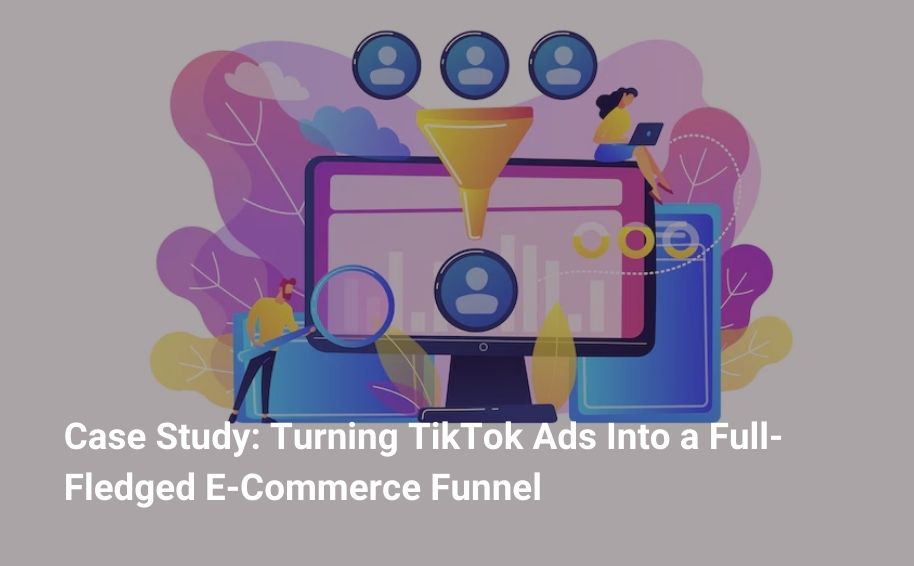
TikTok long ago surpassed being valued as Generation Z’s lip-syncing platform. Today, as of 2025, TikTok is among the most potent eCommerce platforms. In the USA, Britain, and UAE, companies appreciate TikTok more than going viral—it’s an end-to-end platform with the ability of building product awareness, consumer approval, and in-app conversions in scools of problems. And yet as more businesses transition on TikTok, they find themselves in an all-too-familiar cycle of high views with very little actual sales. The issues aren’t reached — it’s rigour. The overwhelming majority of businesses have no TikTok eCommerce strategy behind buyer journey through awareness through conversion. That is the conversion of on thi trap–viral views, poor conversion–into brand-new presence with performance-driven TikTok eCommerce funnel. We describe exactly what we did through creator-focused content, Spark ads, TikTok Shop functionality, and in-app monitoring and made all of it measurable revenue and ROI. By the end of this explainer, you’ll know why An A TikTok Shop Agency is more than a next-gen partner—but rather your brand’s eCommerce growth engine.
The Issue: Huge Exposure, No Single Sale
As soon as we boarded with this Beauty and Cosmetics company, the counts on their TikTok were quite good at first impression. Their tiktoks were between 50,000 and 250,000 views, going beyond occasionally with some of it being more than a million. Their followers were in lacs, and their each post’s engagement was good–comments, likes, shares. Though sales had quite an opposite story. They had zero web traffic through TikTok, extremely high bounce rates, and conversions were near to zero. They had fallen prey to the usual mistake of having created for virality, not for gaining customers.
Specific Issues Identified:
Not retargeting and not segmenting audiencesIn-app checkout not available and TikTok Shop integrationNot measuring performance with TikTok PixelNo funnel planning and intention of content alignmentDétachée influence campaigns—the influencers were promoting, but not convertingThey were being observed—but observances don’t have impulsive sales.
Step 1. Creating an eCommerce Funnel on TikTok
We re-strategized their TikTok account into the three-tier funnel framework:Top of Funnel (TOFU) leveraging Viral, organically native user-Generated Content and storytelling through creators for awareness generationMiddle of Funnel (MOFU) Retarget using Spark ads and creator authority as part of building intent intentionBottom of Funnel (BOFU) Strategies: Scarcity using timers, In-app offers on TikTok Shop, Frictionless checkout
Not only had the funnel controls streamlined the user experience, it had made it normalizable being able to convert observers into customers. We were not only producing videos—we were generating sales pipeline natively on TikTok.
Top of Funnel: Creator-Led Discovery That Won’t Be Seen as Ad
TikTokers need no ads—their necessity is entertainment, value, and relevance. Therefore, we first turned on the network of micro-influencers in beauty, skincare, and wellness niches experts of UGC-like-content. We cooperated with authors with 10K–100K subscribers, whose subscribers were highly unanimous as well as gullible. Their work rate was:Day-in-Life Product Integration“TikTok Made Me Buy It” product review videos with affiliate linksSkit-with problems of the skin and product solutionsAesthetic ASMR-like usage demonstration films with product textures and before/after results
Examples:One of the founders flaunted the brand’s exfoliator as part of their pre-sunday reset. It had 1.2M views, but more importantly, 17K clicked on the product tag and 2,800 saved as they might consider it later—a flag for mid-funnel retargeting.Seo-optimized all of the text for:Watch timeSavesStocksIn-video product linking within TikTok Shop
Instead of defining the product with words, we showed it live. It generated curiosity on the very first account with innovativeness rather than with overproduction.
Middle of Funnel: Spark Ads with Creators Retargeting
After identifying popular-performing content, we amplified it through Spark Ads—but not as brand ads, but as creator ads.
Why Spark Ads?
As Spark can re-distribute native TikTok content of creators without having to relinquish the metric of engagement (likes, comments, shares). It keeps the format of the ads native-appearing while supplying it with algorithmic reach. We retargeted respondents of Spark Ad using TikTok Pixel-led retargeting audiences:Viewers of 75% or more of a video.They have indeed clicked on the product but never bought it.TikTok Shop page observersVideo savers
Each Spark Ad included:Copied with fear: “12 hours left only!”Limited-time discount stickersAlternative imagery (e.g. close-up + transformationActionable CTA such as ‘Buy in-app, ships today!’
These Retargeting Spark ads were successful because the user already had prior contact with the creator, and now were being reminded with an incentive. The Spark Ad conversions were 4.1 times greater than baseline ads going through the brand account.
Funnel Bottom: TikTok Shop + In-App Scarcity
That’s where we turned the switch off to buy interest. Instead of passing on customers at a Shopify store, we facilitated complete TikTok Shop eCommerce checkout within the app. It encompassed:Products anchors on each videoDiscounts exclusive to TikTokOne-click in-app checkout”Shop now” tab profile personalizationReal-time affiliate monitoring for affiliate creators
These we superposed with strategies-with-urgency-derived:Timers of count down: “Price increases after 3 hours”
Inventory sticker shortage: “Only 21 available”
Bundle offers: “Buy 2, get 1 for free and get free shipment”
Seasonal promotions with calendar tie-ins (e.g., “Skin Reset January”)
TikTok Shop’s in-app native format helped consumers not need to leave the app, thereby reducing the drop-off considerably and obtaining much higher impulse purchases. On creators’ ends, affiliate tracking and pay incentive benefited them with more incentive to keep promoting the product.
Tools Used
1. TikTok Pixel
We established and implemented TikTok Pixel to track:Quote page views.Add to cart eventsBegin checkoutBuy
Based on these numbers, we made performance dashboards indicating:Which had the top-performing ROI creatorsWhich types of content generated peak retentionWhich time intervals had the best conversions
We applied that insight to flip ads, push the good stuff, and eliminate under-performing creators or video types in real-time.
2. TikTok Shop
Integration with TikTok Shop turned the brand natively native online store. Goodbye leaks of referral-boosted traffic—all product were available at once, in-platform. We optimized their TikTok Shop by:Creating high-converting product duplicationsThrough bundling and dynamic pricingMaintaining visuals in sync with video recordingsAnd having ‘TikTok Only’ sales once every 10 days
TikTok Shop enabled real-time auto-refreshes of stocks, pay-outs of creators, and review integrations—all transforming the platform into a social commerce platform.
3. Creator Affiliate Network
We were long-term affiliates of TikTok’s partner creators with affiliate dashboard and creators marketplace. We had set a percentage of pay out and only specific tracking links per creator.Top 10% of creators were rewarded with:Bonus commissionsFirst access on brand-new campaignsExclusivity Rep agreements of brand.
That made it a flywheel wherein inventors were selling awareness as much as they were locked financially with sales results.
Results
 2.5 Rate of Parameter
Prior to funnel refreshment, the site was at ~0.8% conversion. Three months following funnel refreshment, TikTok Shop check-outs were at 2.1% conversion rate, nearly tripling the output while spending the same amount on ads.
 43% Rate of Fall
Pre-funnel, post-click lost users going through on the bio link of the brand site. Minimalized bounce kept checkout in-app. Lock-in habitual scrollers have TikTok consumers—their flow is immediately dead if conversion is lost. Momentum was preserved with checkout in-app.
 3-Time ROI within Campaign Period
Each dollar invested had $3.10 sales generated as registered through the Shop dashboard and TikTok Pixel. Creator Campaigns had the strongest performance with 1 micro-influencer achieving 5.2x ROAS within 6 weeks.
Actual-World Case Studies
Case Study 1: MadebyMitchell (UK Beauty Company)
TikTok Shop viral in 2023 with MadebyMitchell’s product-hybrid “Blursh,” selling out of all stocked across 48 hours and achieving £1M TikTok sales in 6 weeks via live TikTok Shop events, creator affiliate codes, and in-app only bundles, the brand demonstrated creator-first selling with in-app urgency is king. Their funnel consisted of edu demos, influencer UGC, and product drops with Spark Ads—all demonstrating creator-first selling with in-app urgency is king.
Case Study 2: Function of Beauty (US/UK Haircare Company)
Sarah Function of Beauty employed TikTok for sales of personalized shampoo. The campaign used “TikTok scientists” (lab presenters in white lab coats explaining formulations) and TikTok Shop checkout. The results? 54% reduced CAC compared with Meta ads and 2.8X TikTok Shop-bundle ROC. Their real power was converting educational content into transactional sales.
Conclusion
TikTok is no longer shorter than attention-grabbing with views and followers—it’s all repeatable sales funnel going on inside the app. With the proper TikTok eCommerce strategy, any brand can transform viewers into customers and creators into fully empowered sales channels.Whether it’s conversions, non-encouraging Spark Ads, or poorly written—the solution is having a funnel and not more articles.
 Collaborate with a TikTok Shop Agency that Creates Funnels—not Video ClipsIf you’re thinking of creating a TikTok Shop strategy yielding ROI on ads rather than views, I can assist.
FAQs
1. How is TikTok eCommerce distinguished and How Does it Influence Consumers?
TikTok eCommerce is selling using TikTok’s native tools like TikTok Shop, creator integrations, and in-app paychecks. It is not traditional eCommerce because it’s more social discovery, creator influencer, and platform-native scarcity being consumer drivers within the app.
2. Why is TikTok Shop good for businesses dealing with eCommerce?
TikTok Shop Empowers:In-app checkout (reduces bounceSeamless embedding with articlesCreator affiliate commissionsFlash sales and bundling offers
They remove frictions at buy and product discovery.
3. How can a TikTok Shop Agency benefit my company?
A TikTok Shop agency constructs yours on top of the funnel—the foundation of creative strategy and UGC, retargeting with Spark Ads, and maximizing TikTok Shop for conversions. They operate on curation of influencer, performance monitoring, and reporting as well.
4. How do I need TikTok for successful eCommerce?
Pixel TikTok (conversions et publique)Spark ads (.Creator Retargeting)TikTok Shop (Local Checkout)Affiliate generation software tools (scaling sales + UGC)
You’re leaving conversions on the table without those.
5. Could any product category potentially work on TikTok?
Some sectors underperform others, like:Beauty and DermatologyClothing and accessoriesLifestyle gadgetsWellness and fitnessFood/sn
Success is more end-user scenarios of creator and story than product expense.